How Can You Market a Small Business Without Customer Testimonials?
Build credible marketing without reviews or testimonials: an observable proof library of process, details, and decision guidance, honest captions, consent and privacy checks, and what content does not prove.
By Successful Marketing Solutions · · 7 min read
New businesses, businesses whose customers value privacy, and businesses that simply never asked for reviews all face the same gap: marketing advice assumes you have glowing quotes to share. You may not, and that is fine. What you cannot do is fill the gap with invented ones.
The short answer
Do not manufacture social proof. Instead, build content from things a prospective customer can observe and check for themselves: how you work, what the product or service includes, where and how it happens, guidance that helps people decide, the roles of people on your team (with their permission), answers to common questions, and a clear next step. Be honest about what that content shows and what it does not prove.
Know what kind of content you are making
- Demonstration or observation: showing what you do or what something looks like. It proves that the thing exists and works this way, not that customers loved it.
- Testimonial: a real customer's own words about their experience. It must be genuine and reflect what that person actually said.
- Endorsement: a person or organization publicly backing your business. The FTC says endorsements must reflect honest opinions, and any material connection, such as payment, free product, or a family or business relationship, needs clear disclosure.
- Case study: a documented account of a specific engagement, which requires permission and accurate details.
- Performance claim: a statement about results, such as speed, savings, or satisfaction rates. The FTC's small-business advertising guidance says objective claims need evidence before you make them.
Most businesses without testimonials should live mainly in the first category, and do it well.
Build an observable proof library
An observable proof library is a folder of photos, short clips, and notes you can reuse across your website, social posts, and listings. Organize it by category:
- Process: the steps of a typical job, from preparation to the finished result.
- Product or service details: materials, tools, what is included, and what is not.
- Environment: your workspace, vehicle, equipment, or setup, shown as it really is.
- Decision guidance: short explanations that help people choose, such as which option suits which situation.
- Team roles: who does what, shown only with each person's permission.
- FAQs: plain answers to the questions people ask before buying.
- Next step: what happens when someone books, calls, or visits.
A starting shot and asset checklist:
- Close-up of hands doing one step of the work.
- Before-and-during-and-after of your own materials or equipment, not a customer's property unless they agreed.
- Wide shot of the workspace or setup.
- Flat-lay of tools or ingredients, labeled.
- A 15–30 second explanation of one common question.
- A screen recording or photo of how booking or ordering works.
- A staff introduction, recorded only with that person's consent.
Captions that describe rather than exaggerate
The caption is where honest content often drifts into unsupported claims. Prefer specific description over superlatives:
Overstated
- “The best tune-up in town.”
- “Customers love us!”
- “Guaranteed to last for years.”
Descriptive
- “What a standard tune-up includes, step by step.”
- “Here is how we check brake pads before every ride.”
- “How to tell when this part needs replacing.”
Review claims and permissions before posting
- Is every factual statement something you can support?
- Does anything imply a review, endorsement, or result you do not have?
- Does anyone appear, speak, or become identifiable? If so, do you have their consent?
- Is any personal information visible: faces, addresses, house numbers, license plates, screens, or paperwork?
- Do you have rights to the music, footage, and images used?
YouTube's guidance asks creators to secure the permissions their content needs and to respect privacy; its privacy guidelines explain that people can request removal of content that includes their image, voice, or personal information without consent. Treat that as a sensible standard on every platform.
Useful content without filming customers
You do not need customer footage to show what you do. Film your own hands, tools, and materials. Recreate common situations with your own equipment. Answer questions directly to camera, or use voice-over on process shots. Blur or crop anything that identifies a location or person. When a customer does offer feedback, ask for permission in writing before quoting it, and use their words exactly.
Starting point
- A fictional mobile bike mechanic has no reviews yet and works at customers' homes.
- The owner is tempted to post “5-star service” graphics.
- Most repair photos show customers' driveways and house numbers.
Observable proof instead
- Short clips of a brake adjustment and chain replacement on the owner's own bike.
- A labeled photo of the tools carried in the van.
- A “what happens when I arrive” explainer recorded on a quiet public street.
- An FAQ series answering questions such as “can you fix e-bikes?”
- No star graphics; driveway photos cropped or not used.
What the SMS video examples show
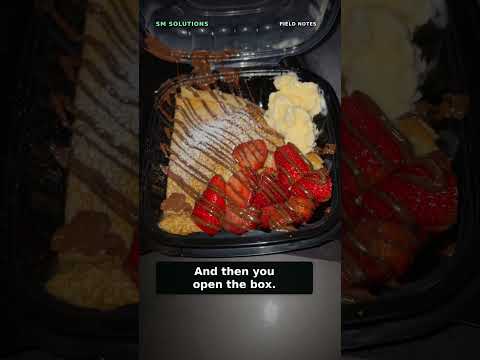
The related SMS videos below illustrate this approach. Show the process, sell the experience, make the brand memorable, and build trust each point to ways real businesses communicate through what customers can see. These are independent editorial observations: the featured businesses are not disclosed SMS clients, endorsements, paid partnerships, or performance case studies. The videos do not claim that SMS created or implemented those businesses' marketing.
Next step
SMS is a Kansas-based, founder-led marketing company serving small businesses nationwide, with travel available by arrangement. If you want help planning an honest proof library, the free 30-minute 90-Day Marketing Rollout Meeting with Lamont is a no-obligation conversation booked through Square. Content production, branding, website work, written plans, implementation, monthly support, and paid consulting are scoped and quoted separately.
Sources
Want help applying this?
Bring your question to a free 30-minute 90-Day Marketing Rollout Meeting with the SMS team. Discuss your goals and next priorities, with no obligation.
All appointments are booked through Square. Choose your service and available time there. Free 30-minute Google Meet with the SMS team. Discuss your goals, outline your next 90 days, and see whether ongoing marketing support fits your business. No obligation. Your Google Meet link will be sent separately before your call.